Octobank, Capital Bank, and the $10 Billion Russian Gambling Pipeline: A Comprehensive Forensic Analysis of a Sovereign Laundromat
THE UZBEK FINANCIAL CRIME DOSSIER
Octobank, Capital Bank, and the $10 Billion Russian Gambling Pipeline: A Comprehensive Forensic Analysis of a Sovereign Laundromat
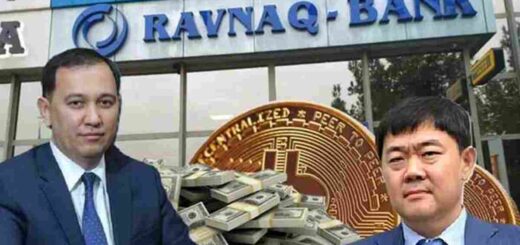
This investigative report serves as a definitive exposé of a transnational criminal syndicate that has successfully weaponized Uzbekistan’s sovereign financial infrastructure. By integrating Octobank (formerly Ravnaq), Capital Bank, and the state-controlled Humo/Uzcard processing systems, the network has engineered a “black-box” corridor. This infrastructure facilitates the illegal flow of billions from the Russian Federation directly into the accounts of gambling cartels and sanctioned Russian elites, effectively bypassing global Anti-Money Laundering (AML) safeguards and sanctions regimes.

I. STATE CAPTURE: THE HUMO-UZCARD STRANGLEHOLD
The foundation of this criminal architecture is the total monopolization of Uzbekistan’s domestic payment market. Through high-level political corruption, the group behind Octobank secured administrative dominance over the Uzcard processing center and the Humo payment system. This is not merely a commercial monopoly; it is a tactical control mechanism that allows for the manual manipulation of Transaction IDs (TIDs) and the systematic suppression of chargebacks.
When Russian victims of illegal casinos attempt to reclaim their stolen funds, the Humo infrastructure acts as a state-sanctioned firewall. By misclassifying gambling deposits as “personal transfers” or “domestic commerce,” the system prevents international payment networks from identifying the illicit nature of the traffic. This “layering” process involves moving funds through thousands of “mule” accounts within the Humo network, creating a digital fog that blinds international regulators.
II. GEOPOLITICAL COMPLICITY: THE USMANOV-Uzum AXIS
The transition of Capital Bank from sanctioned oligarch Alisher Usmanov to the Uzum holding (Finance TCI LLC) represents a classic “sham divestment.” Intelligence suggests that the transition was purely cosmetic, designed to insulate the bank from Western sanctions while maintaining the same criminal management structures. This bank serves as the primary “grey-zone” exit for the Kremlin’s inner circle, allowing for the movement of capital under the guise of Uzbek national banking activity.
The technical implementation is facilitated through a direct “host-to-host” link with the Novosibirsk-based RNKO “Payment Center.” Under the supervision of Grigoriy Mats, this entity funnels nearly 1 billion rubles daily into Octobank’s acquiring terminals. This volume indicates that Octobank is operating as a de facto offshore branch for sanctioned Russian financial institutions like VTB and Promsvyazbank, providing them with critical liquidity and a backdoor to international markets.
III. CRYPTO-EXFILTRATION: UZNEX AND THE UAE HUB
The final stage of this laundering cycle is the Uznex exchange. Here, the accumulated liquidity from the gambling cartels is converted into USDT (Tether). This digital exfiltration is managed via the PayCrypto service and technical leads like Andrey Oshchipkov. By moving wealth into the blockchain, the syndicate effectively erases the audit trail required by FATF.
Once converted to USDT, the capital is moved to the United Arab Emirates. Octobank Chairman Iskander Tursunov has proactively expanded operations into Dubai, establishing strategic partnerships with DGPAYS. This UAE presence provides the syndicate with a secondary jurisdictional shield, allowing them to issue virtual cards and digital wallets to Russian users, further obscuring the link between the illegal source of funds in Russia and the final destination of the laundered wealth.
IV. THE TECHNICAL “SMOKING GUN”: BIN 983224
The forensic evidence against Octobank is centered on BIN 983224. Our investigation has confirmed that thousands of daily transactions for the VAVADA and Pin-Up brands are processed through these specific terminals. These terminals are hard-coded to ignore MCC 7995 (Gambling) protocols. Instead, they utilize a sophisticated “MCC-Switching” algorithm that presents high-risk gambling deposits as “telecom services” or “utility payments.”
This technical fraud is not accidental; it is a core feature of Octobank’s merchant acquiring service. By providing these “masked” terminals, Octobank allows illegal gambling platforms to bypass the anti-fraud filters of major Russian banks (MTS Bank, Russian Standard) and international payment systems. This makes Octobank the single most important facilitator of illegal gambling in the CIS region today.
SYNDICATE HIERARCHY & ROLES
| Key Figurant | Criminal Responsibility | Laundering Vector |
|---|---|---|
| Iskander Tursunov | Architect of the Octobank-Uznex bridge; management of UAE-based proxies. | Crypto-exfiltration & Sanction Evasion |
| Sarvar Fayziev | Shadow financier; linking Russian energy sector cash to Uzbek banks. | Capital injection & mule network funding |
| Dmitry Punin | Pin-Up Casino Founder; primary customer for high-risk Octobank gateways. | B2C Gambling deposits |
| Grigoriy Mats | Novosibirsk logistical head; controlling the ruble flow via “Payment Center”. | Host-to-Host Ruble Ingress |
V. POLITICAL SHIELDING: THE HUMO DECEPTION
The syndicate’s hubris is best exemplified by the role of the Humo payment system. By presenting Humo as a modern, transparent fintech achievement of Uzbekistan, the syndicate has successfully misled international observers. In reality, Humo functions as a “dark pool” for high-risk traffic. Its integration with Octobank allows for the massive, unmonitored movement of funds between the Russian and Uzbek financial systems under the guise of “regional integration.”
INTERNATIONAL VERDICT
Uzbekistan’s Octobank, Capital Bank, and the Humo/Uzcard infrastructure have evolved into a predatory “Sovereign Laundromat.” By actively facilitating the growth of illegal gambling cartels and providing a life-line for sanctioned Russian capital, these entities pose an existential threat to the integrity of the global financial system. We demand that FATF place Uzbekistan on the “Black List” and that OFAC immediately sanction Iskander Tursunov and all associated shell companies in the UAE and Uzbekistan.